


Dental erosion
In dental erosion, tooth enamel is dissolved by acids from drinks, food or stomach acid. Dental erosion is a serious problem; over time the enamel can dissolve completely. Once gone, enamel does not come back.






Causes of dental erosion
Dental erosion is wear of the tooth enamel caused by acids. A distinction is made between acids from inside the body (intrinsic acids) and acids from outside the body (extrinsic acids).
Intrinsic acids
Intrinsic acids play a role when stomach contents (stomach acid) flow back into the mouth (reflux). This can be caused by belching, but also by vomiting. Acid regurgitation can occur in people with digestive complaints, heartburn or pain in the stomach area. People with eating disorders involving frequent vomiting can also suffer greatly from dental erosion. The habit of regurgitating and re-chewing food can also cause dental erosion.
Extrinsic acids
Extrinsic acids can cause wear through consuming acidic food too much, too often and/or for too long, such as soft drinks, citrus fruits or medication (for example aspirin, vitamin C). It can also concern people who are exposed to acids in their mouth because of their profession (for example metalworking, wine tasting). In addition, people with too little saliva are more likely to suffer from erosion.
Dental erosion from soft drinks and fruit juices
Soft drinks and fruit juices play an important role in dental erosion. Many of these drinks contain ‘hidden’ acids; the added sugar or sweetener masks the high acid content. How something tastes says little about whether it is acidic, because sugar, sweeteners and flavourings mask acidity.
Nowadays you can buy soft drinks and fruit juices everywhere. Most also come in resealable packaging, so you no longer have to finish them in one go. As a result, we are all drinking more of these soft drinks and fruit juices, more often and over a longer period. This is not good for your teeth and can contribute to the dissolving of teeth and molars. It is advisable to replace these drinks as much as possible with water and milk or plain tea without sugar. Acidic foods also cause dental erosion. Be particularly careful with acidic fruit (and products made from it). In addition, many foods are acidified with, for example, acetic or citric acid, so keep this in mind too.
How much does this treatment cost?

Signs of dental erosion
At first you will notice little of dental erosion. Only at a later stage can dental erosion cause sensitivity when eating and drinking. The enamel of your teeth and molars becomes thinner, which causes the sensitivity. The appearance of your teeth also changes: they become more yellow because the darker dentine becomes visible. Teeth and molars can also become smaller, which can eventually change your bite.
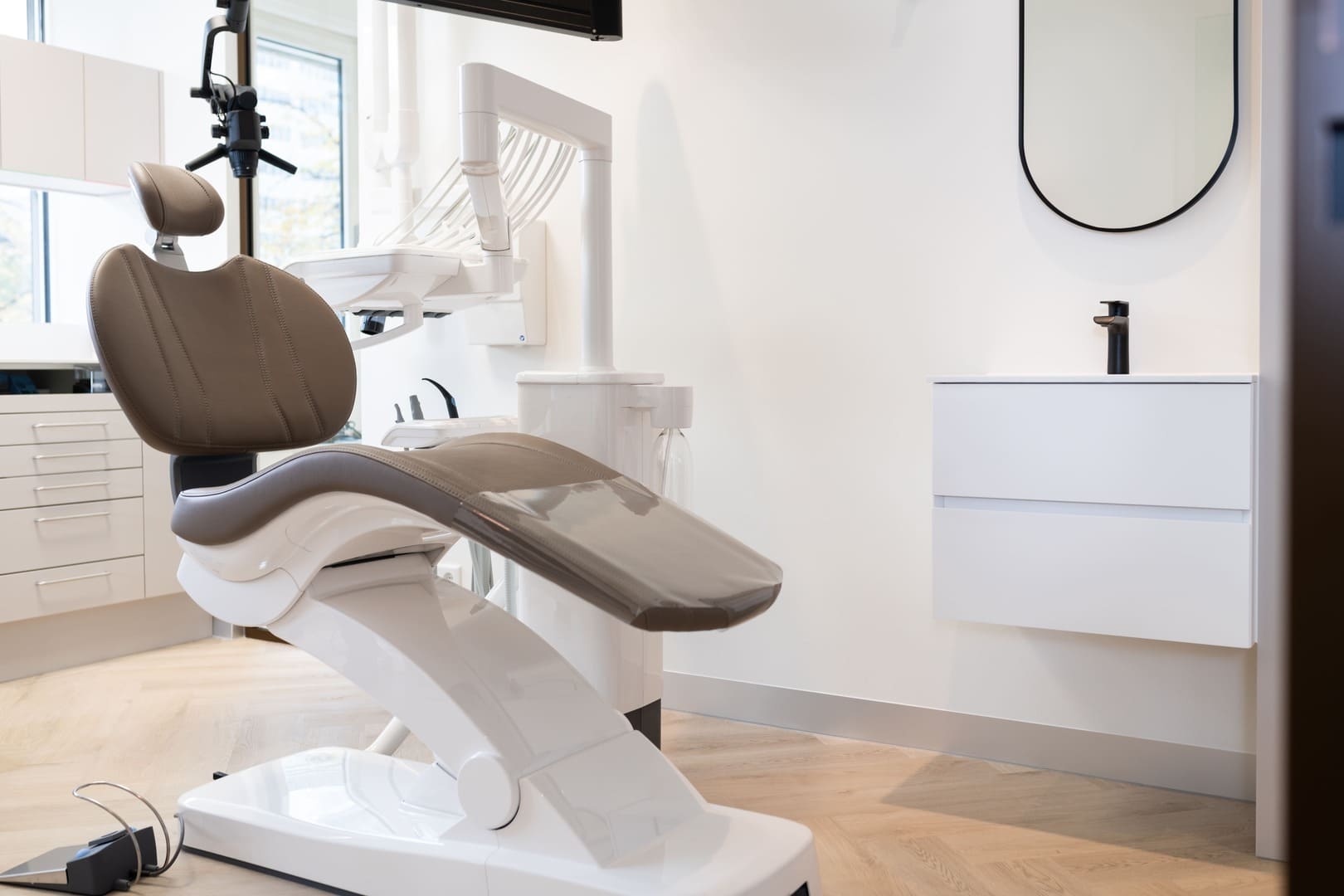
A look inside the practice
This is what it's like at our practice
Short videos of our team and our practice on the Weena. So you know exactly what to expect — even before your first visit.


Treatment of dental erosion
There is no treatment for dental erosion yet, and in an early stage it is usually not necessary. However, preventing (further) dental erosion is important to avoid problems, so follow the tips below as much as possible.
If the enamel on the chewing surfaces of the tooth or molar has completely dissolved and the dentine has been reached, this can lead to hypersensitive teeth and molars and pain when chewing, making treatment necessary.
In these cases we will try to restore the teeth as well as possible with simple means, for example with white fillings (composite). For severely affected teeth and molars, or if the appearance of the teeth changes, treatment with inlays, crowns or veneers may sometimes be necessary.
Tips for preventing dental erosion
Whether you suffer from dental erosion depends on how often you drink and how long the acidic liquid is in contact with your teeth and molars. The longer the acidic liquid stays in your mouth, the greater the chance that it dissolves your tooth tissue. Swishing, slurping or sipping acidic drinks increases the risk of erosion, because your mouth stays acidic for longer. You can avoid this by drinking through a straw. Place it a little further back in your mouth and do not chew on it. It is also better not to drink acidic drinks shortly before going to sleep, as there is then a good chance that some acid will remain in your mouth during the night.
Preferably no light products
Light soft drinks contain acid just like regular drinks. Light only means that, compared to the 'regular' product, it contains at least 30% less energy (kcal) or sugar. The label 'light' says nothing about the amount of acid present.
So what can you drink?
You can drink water, milk and plain tea without any problem, as well as sparkling mineral water. Yoghurt and buttermilk may taste sour, but thanks to the calcium they contain they are also safe for your teeth (provided you do not add sugar).

What else can you do?
- Maintain optimal oral hygiene.
- If possible, add water to fruit juices to weaken the acid.
- Preferably limit the number of eating and drinking moments to 7 per day.
- Limit acidic drinks and drink as much water, plain tea, coffee or milk as possible.
- Preferably swallow the drink as quickly as possible.
- Do not brush your teeth immediately after eating or drinking acidic products, but wait about one hour before brushing.
- Brush twice a day with fluoride toothpaste to strengthen your teeth. It is advisable to use a soft toothbrush and a low-abrasive toothpaste.
- Do not consume anything acidic at night or before going to bed.
- Stimulate saliva production by chewing sugar-free gum; saliva has a neutralising effect.
Patient experiences
Our patients' experiences


Our team
“We are a driven group of talented care providers. We understand that a healthy, pain-free mouth and fresh smile have a huge impact on your quality of life and appearance.”
Frequently asked questions
Can dental erosion be repaired?
No, dental erosion cannot be reversed. Once your enamel has gone, it does not come back.
Does dental erosion hurt?
Dental erosion can cause sensitivity when eating and drinking. Whether this is painful differs from person to person, but it is certainly very unpleasant.
What happens in dental erosion?
In dental erosion, tooth enamel is dissolved by acids from drinks, food or stomach acid.
Getting here
Our dental practice at Weena 91 is easy to reach, right in the centre of Rotterdam and within walking distance of Rotterdam Central Station. Thanks to this central location, the practice is easily accessible by public transport: several train, metro, tram and bus lines stop close to the Weena, including metro lines B, D and E. From Rotterdam Central Station you will be at the practice within a few minutes, making it ideal for residents of Rotterdam as well as patients from surrounding towns.
The practice is also easy to reach by car via the main roads into the city centre, with parking facilities nearby. This means Loef Mondzorg combines a central location with excellent accessibility, both by public transport and by car.
Rotterdam City Centre location
- Weena 91, 3013 CH Rotterdam
- 010 200 4815
- info@loefmondzorg.nl
- KVK 82679282
Opening hours Open now · today until 17:00
- Monday 08:00 – 17:00
- Tuesday 08:00 – 21:00
- Wednesday 08:00 – 17:00
- Thursday 08:00 – 17:00
- Friday 08:00 – 17:00
- Saturday 09:00 – 16:00
- Sunday Closed
Also open on Tuesday evenings until 21:00 — easy to combine your visit with work.
Register
Our team of dedicated care providers knows how important a healthy, pain-free mouth and a radiant smile are for your quality of life and self-confidence. Curious about our practice? Register and come and visit us. We are happy to guide you through the world of dental care and explain everything clearly with helpful instruction videos.