


Wisdom teeth removal
People have room for 32 teeth and molars. Wisdom teeth are the last molars to come through at the back of the mouth, usually between the ages of 18 and 22. Nowadays, many people have jaws that are too narrow for all 32, and only 28 teeth and molars fit in the jaw (or sometimes even fewer). So when all 28 are present and well spread across the jaw, there is too little room for the wisdom teeth to come through.






Wisdom teeth coming through
Wisdom teeth coming through can cause pain. This does not necessarily mean that the tooth has to be removed. Initially, you can relieve the pain with paracetamol or ibuprofen. It is also important to gently brush the gum where the wisdom tooth is coming through. This prevents inflammation.
However, if the pain does not go away, the gum becomes inflamed or you have difficulty opening your mouth, please contact us. With an X-ray we can see how and whether your wisdom tooth is coming through. We will then decide together whether or not the wisdom tooth should be removed.
Do wisdom teeth always cause problems?
If there is enough room in the mouth, wisdom teeth will not cause problems. But if they become inflamed, grow crooked or get in the way of other teeth, it is better to have them removed. Many people do not have enough room for their wisdom teeth. Visit us to discuss what is best.
Who removes the wisdom tooth?
Using the X-ray, we determine how difficult removing the wisdom tooth will be. Nowadays, many dentists remove wisdom teeth themselves. If the risk of infection is high, or if the tooth is very deep, for example, we will refer you to an oral surgeon.
Inflamed gums
Besides pain or pressure due to a lack of space in the jaw, an inflamed wisdom tooth can also cause considerable discomfort. When a wisdom tooth only partially breaks through, a flap of gum often remains over the tooth. Bacteria and food debris easily build up in this vulnerable area, which can lead to inflammation of the gum and the surrounding jawbone. This not only causes pain and swelling, but can also make it difficult to open your mouth. Below you can read which symptoms indicate an inflamed wisdom tooth and what you can do yourself to relieve the pain.
Symptoms of an inflamed wisdom tooth
When a wisdom tooth (often at the back of the jaw) partially breaks through and the surrounding gum becomes irritated, various symptoms can occur. You can recognise an inflamed wisdom tooth by, for example:
- Persistent, throbbing or sharp pain at the back of the mouth or in the jaw, which gets worse when chewing or opening the mouth.
- The gum around the tooth is often red, swollen or bleeds easily. Sometimes you can see a small flap of gum over the tooth.
- A bad taste in the mouth or noticeable bad breath, often caused by bacteria and food debris trapped between the gum and the tooth.
- Swelling of the cheek or jaw area: the jaw may feel tight, moving the mouth becomes more difficult and swallowing or opening the mouth causes extra discomfort.
- In some cases, general symptoms occur, such as a mild fever, feeling unwell or swollen lymph nodes under the jaw.
- Sometimes you feel pressure in the jaw: the wisdom tooth cannot break through properly or presses against neighbouring molars, which puts extra strain on the gum and jawbone.
Do you recognise several of these symptoms? Then it is wise to contact your dentist in good time, so that the inflamed gum and the tooth can be assessed early and worse can be prevented.
Tips for an inflamed wisdom tooth: what can I do myself?
An inflamed wisdom tooth is painful and unpleasant, but fortunately there is a lot you can do yourself to relieve the symptoms and reduce the gum inflammation. The most important rule: keep the area clean, calm and cool.
Start with good oral hygiene. Brush your teeth as usual, but be extra careful around the inflamed gum at the back of the mouth. Use a soft toothbrush and move gently to prevent further irritation. An antibacterial mouthwash (for example with chlorhexidine) can help reduce bacteria and soothe the gum. Rinse once or twice a day, but not immediately after brushing.
Do you have pain or swelling? Cool the outside of your cheek with a cold flannel or an ice pack (with a cloth in between) to limit the swelling. Avoid heat, as it can make the inflammation worse. You can also take paracetamol or ibuprofen to relieve the pain and temporarily reduce the inflammation.
Also pay attention to your diet and habits. Preferably eat soft food and chew on the other side of your mouth. Avoid sticky or hard food that can get stuck between the wisdom tooth and the gum. Smoking and alcohol slow down the healing of the gum, so try to avoid them for a while.
Finally: contact your dentist if the pain lasts longer than a few days, the gum keeps swelling or you have difficulty opening your mouth. Sometimes the wisdom tooth lies too deep in the jaw or the inflammation is too advanced. In that case, professional cleaning or removal of the wisdom tooth may be necessary to restore the health of the gum and jaw.
How is a wisdom tooth removed?
Depending on its position and shape, removing a wisdom tooth ranges from easy to somewhat more difficult. The dentist or oral surgeon gives you a local anaesthetic before the treatment. Once it has taken effect, the dentist removes the wisdom tooth with forceps or pushes it out with an elevator, using a rotating or rocking movement. Sometimes other instruments are used as well. Usually the tooth is removed in one piece. If the wisdom tooth is very firmly in place, it will be removed in sections.
Does the treatment hurt?
Thanks to the anaesthetic, the procedure itself is generally not painful. To minimise the risk of infection after the treatment and speed up healing, it is important to keep a few things in mind.
The first days after wisdom tooth removal
Until the anaesthetic has worn off, you should not eat or drink anything hot. Try to keep smoking and drinking alcohol to a minimum on the first day after the procedure. It is also important to leave the blood clot that forms undisturbed, as it protects the bone. You may feel small pieces of bone coming out of the socket. Do not worry, this is harmless.
During the first two to three days, the wound may swell slightly and feel uncomfortable. You can then take painkillers (paracetamol or ibuprofen) for the pain.
Oral hygiene after wisdom tooth removal
Do not clean your mouth for the first 6 hours after wisdom tooth removal. Brush your other teeth as you normally would and be careful near the wound. You can keep the area around the wound clean with an antibacterial mouthwash, which you will receive from us.
Severe pain may indicate a dry socket.
If you develop severe pain two days after the tooth has been removed, the blood clot may have come loose or dissolved. It is important that you contact us if this happens.
How much does this treatment cost?
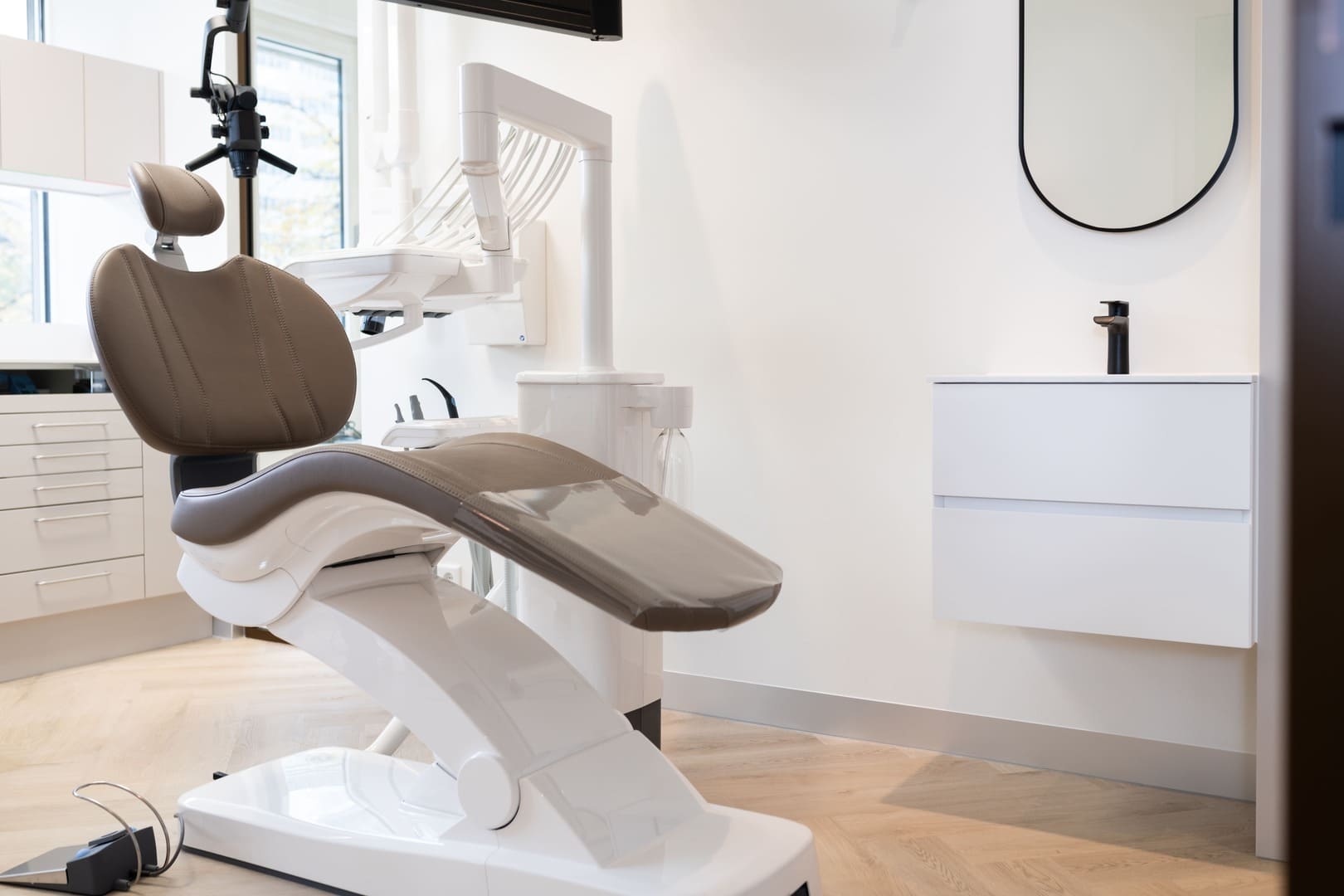
A look inside the practice


Patient experiences
Our patients' experiences


Our team
“We are a driven group of talented care providers. We understand that a healthy, pain-free mouth and fresh smile have a huge impact on your quality of life and appearance.”
Frequently asked questions
How long does recovery after wisdom tooth removal take?
After wisdom teeth have been removed, you may experience discomfort for 5 to 7 days.
At what age do wisdom teeth come through?
Wisdom teeth can appear between the ages of 17 and 21. They do not come through in everyone, and about 25% of people are missing one or more wisdom teeth altogether.
How do you know a wisdom tooth is coming through?
You usually feel a throbbing pain, and the gum is somewhat red and swollen because the tooth is pushing through.
When does a wisdom tooth need to be removed?
Wisdom teeth may be removed if they do not grow properly (sideways, or pushing other teeth aside). They can also be removed if there is decay or inflammation.
How long does removing a wisdom tooth take?
Removing a wisdom tooth usually takes between 10 and 30 minutes per tooth.
A simple extraction can be done within a few minutes, but if the tooth lies deep in the gum or jawbone, the treatment may take a little longer. Thanks to the anaesthetic you will not feel any pain during the extraction, only slight pressure.
When do wisdom teeth come through?
Wisdom teeth often come through between the ages of 17 and 25.
In some people they break through completely, while in others they remain (partly) under the gum or jawbone. About a quarter of people have no wisdom teeth at all; they never develop.
How long is the recovery after removing a wisdom tooth?
The recovery time after removing a wisdom tooth is 5 to 7 days on average.
During this period, the gum may still be sensitive and the jaw slightly swollen. Full recovery of the gum and jawbone takes a few weeks, but most people resume their normal routine after a few days. Good brushing and gentle rinsing help the gum heal faster.
Where are your wisdom teeth?
Wisdom teeth are located at the back of the jaw, on both sides, top and bottom. They are the rearmost molars and the last to come through. Because they are so far back, keeping the gum around these teeth clean can be difficult, which can more easily lead to inflammation of the gum or jaw.
When should your wisdom teeth be removed?
A wisdom tooth usually needs to be removed if:
- There is too little room in the jaw
- The tooth grows crooked or presses against other teeth
- There is repeated inflammation of the gum
- Or the tooth is damaged or affected by decay
The dentist uses an X-ray to assess whether removing the wisdom tooth is necessary. In some cases, you will be referred to an oral surgeon for safe and careful removal.
Getting here
Loef Mondzorg
Our dental practice at Weena 91 is easy to reach, right in the centre of Rotterdam and within walking distance of Rotterdam Central Station. Thanks to this central location, the practice is easily accessible by public transport: several train, metro, tram and bus lines stop close to the Weena, including metro lines B, D and E. From Rotterdam Central Station you will be at the practice within a few minutes, making it ideal for residents of Rotterdam as well as patients from surrounding towns.
The practice is also easy to reach by car via the main roads into the city centre, with parking facilities nearby. This means Loef Mondzorg combines a central location with excellent accessibility, both by public transport and by car.
Rotterdam City Centre location
- Weena 91, 3013 CH Rotterdam
- 010 200 4815
- info@loefmondzorg.nl
- KVK 82679282
Opening hours Open now · today until 17:00
- Monday 08:00 – 17:00
- Tuesday 08:00 – 21:00
- Wednesday 08:00 – 17:00
- Thursday 08:00 – 17:00
- Friday 08:00 – 17:00
- Saturday 09:00 – 16:00
- Sunday Closed
Also open on Tuesday evenings until 21:00 — easy to combine your visit with work.
Register
Our team of dedicated care providers knows how important a healthy, pain-free mouth and a radiant smile are for your quality of life and self-confidence. Curious about our practice? Register and come and visit us. We are happy to guide you through the world of dental care and explain everything clearly with helpful instruction videos.